01
Interpretable
deep learning
Rebuilding iterative algorithms as trainable network layers, with an emphasis on parameter efficiency, convergence, and generalization.
PHD RESEARCHER · IIT BOMBAY
Turning signals into insight.
Making learning interpretable.
I work at the intersection of deep learning, optimization, and signal processing — building models whose structure we can understand.
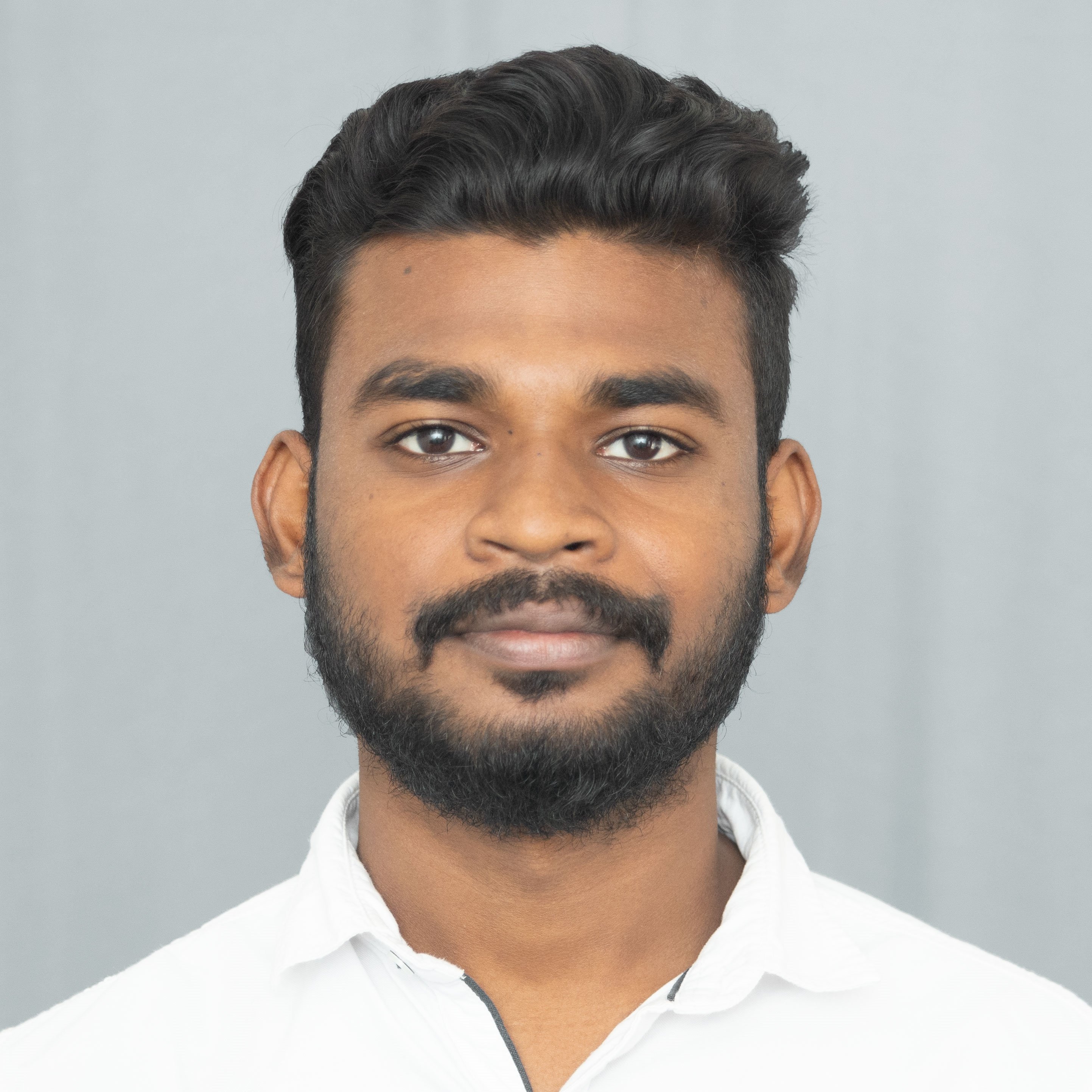
I’m a doctoral researcher in Electrical Engineering at IIT Bombay, advised by Prof. Satish Mulleti.
My research turns classical optimization algorithms into learnable architectures. Through deep unfolding, I study how we can retain algorithmic structure while learning from data — with applications in image restoration, sparse recovery, and sampling theory.
I’m also interested in the theory behind these models: their convergence, generalization, and the conditions under which efficient reconstruction is possible. My earlier work at NIT Hamirpur explored machine learning for thermal and visual image analysis.
Follow my academic journeyLearning from data, guided by the mathematics of the problem.
Rebuilding iterative algorithms as trainable network layers, with an emphasis on parameter efficiency, convergence, and generalization.
Solving inverse problems in image deblurring and sparse signal recovery, including learning from unpaired or limited training data.
Recovering bandlimited signals from modulo measurements and studying unfolded models that adapt to changing domains.
AN IDEA, MADE VISIBLE
Each optimization step becomes a network layer. Move through the steps to see a noisy signal settle toward its underlying structure.
Illustrative visualization · not a trained research modelWork spanning unfolded networks, image reconstruction, and thermal image analysis.
* Equal contribution. Preprints are labeled separately from journal and conference publications.
From electrical engineering to research at the intersection of optimization and machine learning.
View my full CVPh.D. · Electrical Engineering
Interpretable machine learning, deep unfolded networks, and inverse problems. Advised by Prof. Satish Mulleti.
M.Tech. · Signal Processing and Control
Dissertation: Thermal Image Analysis Using Deep Neural Networks. Research in thermal imaging, ensemble learning, and medical image analysis.
B.Tech. · Electrical Engineering · BPUT
A foundation in electrical engineering and the mathematics of signals and systems.
GATE 2020 qualified, Electrical Engineering
PG Training & Placement Representative, NIT Hamirpur
Departmental Master’s Programme Committee member, 2021–23
Python · MATLAB · NumPy · SciPy
PyTorch · TensorFlow · Keras · scikit-learn
LaTeX · Git · Convex optimization
06 / LET’S CONNECT
Interested in interpretable learning, signal reconstruction,
or a shared research question? I’d love to hear from you.