Vikas Kumar Lakhmani
I am a PhD candidate in the Department of Mechanical Engineering at IIT Bombay, working with Prof. Sripriya Ramamoorthy. My research lies at the intersection of acoustics, vibration, multiphysics modeling, auditory biomechanics, and experimental hearing science, with a strong emphasis on combining computational and experimental methodologies.
I develop high-fidelity models of the human ear using the Finite Element Method (FEM) alongside nonlinear electromechanical–acoustic time-domain frameworks to investigate complex sound transmission and cochlear mechanics. These models capture fluid–structure interaction, active amplification mechanisms, and nonlinear transduction processes within the cochlea.
A central focus of my work is the human auditory system, where I combine computational modeling with distortion product otoacoustic emission (DPOAE) measurements in human subjects to study cochlear wave propagation, active amplification, and the generation and backward propagation of otoacoustic emissions toward the outer ear. My broader objective is to bridge physics-based understanding of ear mechanics with experimentally measurable biomarkers relevant to hearing diagnostics.
- Scientific niche: Mechanistic understanding of complex vibro-acoustic systems through integrated modeling and experimentation
- Methods: Finite element modeling • Nonlinear time-domain simulation • DPOAE experiments • Signal processing and analysis
- Postdoctoral research interests: Acoustics • Vibration • Multiphysics Modeling • Computational Mechanics • Computational Biomechanics • Biomechanical Modeling • Experimental Mechanics • Signal Processing • Data-Driven Modeling • AI/ML in Engineering Research • Auditory Biomechanics • Hearing Science
Research Highlights
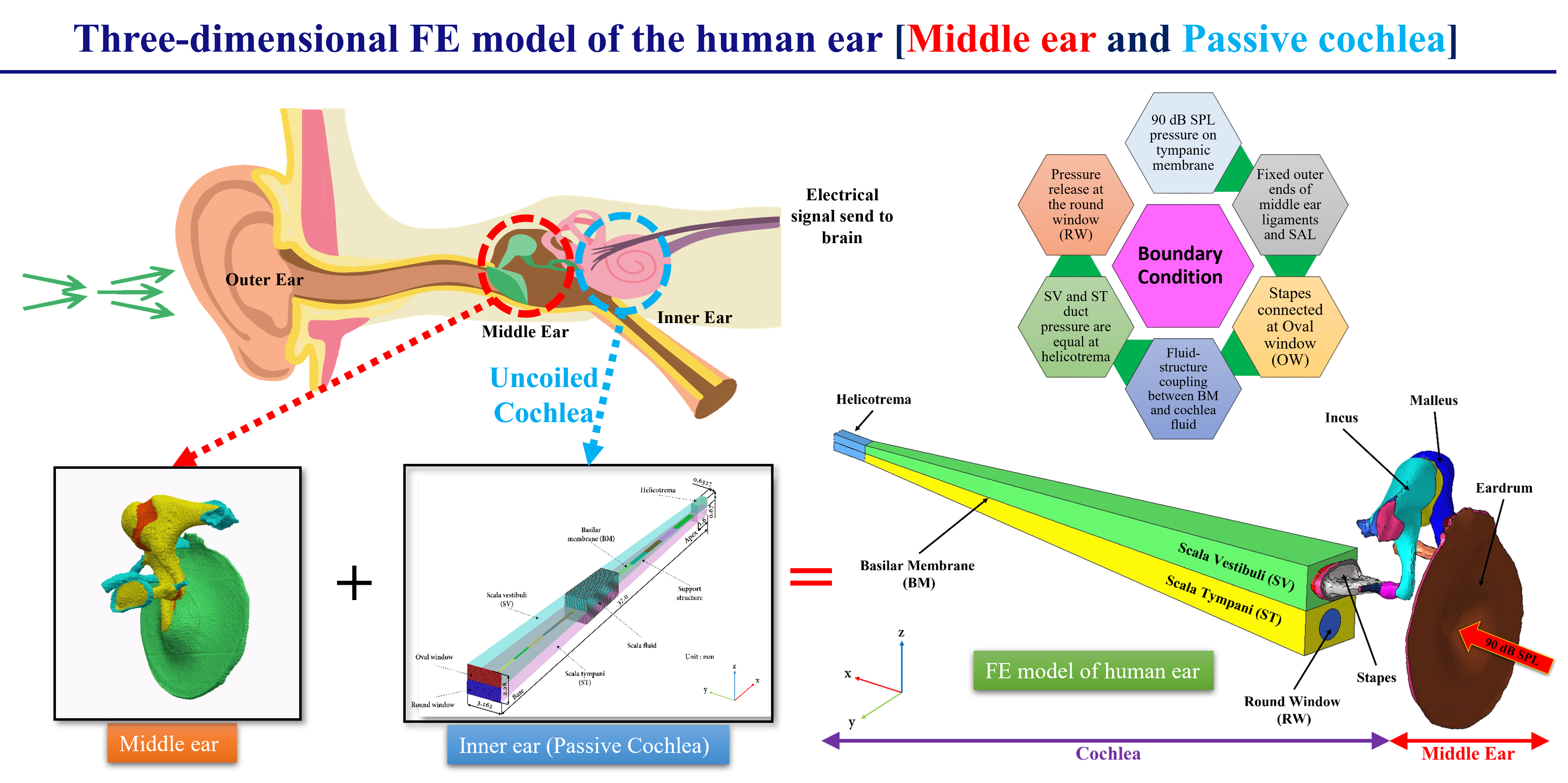
3D Finite Element Modeling of the Human Ear
FEM-based vibro-acoustic simulations of the passive middle and inner ear using ACTRAN.
Nonlinear Active Cochlear Modeling
Time-domain simulations of coupled electromechanical–acoustic models enabling the study of amplification, frequency tuning, and distortion generation in the cochlea.
In-vivo Cochlear Emission Measurements
Human auditory testing using DPOAE protocols including frequency-ratio sweeps, input–output characterization, and low-frequency modulation techniques.
Postdoctoral Research Direction
Integrating multiphysics modeling, computational mechanics, experimentation, and data-driven analysis to study complex problems in acoustics, vibration, biomechanics, and related engineering systems.
Research Map
My research integrates controlled auditory stimulation, middle-ear transmission, cochlear mechanics, and nonlinear emission generation to derive experimentally measurable biomarkers for hearing diagnostics.
Stimulus
Controlled acoustic inputs to excite cochlear responses
Middle Ear
Physiological transmission shaping cochlear input
Cochlear Modeling
Multiphysics modeling of wave propagation, active amplification, and generation of OAEs
Emissions
In-vivo DPOAE measurements capturing nonlinear generation
Diagnostics
Extraction of mechanistically interpretable biomarkers for assessing cochlear function and dysfunction.
Academic Profiles
Research Vision
Understanding Hearing through the 3Ms: Mechanics, Modeling, and Measurement
My long-term goal is to develop mechanistically grounded and experimentally validated models of the auditory periphery that explain how the human cochlea encodes sound, generates otoacoustic emissions, and changes under dysfunction. I aim to bridge inner-ear biomechanics with non-invasive hearing diagnostics, enabling physics-based interpretation of clinically relevant auditory measurements.
My work lies at the intersection of biomechanics, computational acoustics, nonlinear dynamics, and experimental auditory science. By integrating theory, multiphysics modeling, and in-vivo measurements, I seek to uncover fundamental mechanisms of cochlear function and translate them into robust diagnostic frameworks.
My objective is to contribute to interdisciplinary research programs that combine modeling, experimentation, and clinical relevance to advance the understanding and diagnosis of hearing disorders.
Research Snapshot
Research Focus
My research is structured around three complementary directions that together define a unified approach to understanding cochlear mechanics through modeling and experimentation.
Passive Cochlear and Middle-Ear Mechanics
I employ high-fidelity 3D finite element vibro-acoustic simulations to investigate sound transmission through the passive human ear. This includes analyzing the roles of fast compression waves and slow traveling waves in cochlear mechanics, as well as their implications for backward propagation pathways and otoacoustic emission transmission.
Active Nonlinear Cochlear Modeling
I develop nonlinear, physiology-based electromechanical–acoustic time-domain models of the human cochlea to study outer hair cell–driven amplification, frequency selectivity, and distortion generation. These models also enable investigation of how altered or reduced active feedback influences cochlear response under normal and impaired conditions.
Experimental Otoacoustic Emissions
I conduct in-vivo DPOAE measurements in normal-hearing adults using protocols such as frequency-ratio sweeps, input–output functions, and low-frequency bias paradigms. These experiments are designed to identify measurable signatures of cochlear nonlinearities and validate model-based predictions.
What Distinguishes My Profile
- I work across modeling and experiments, rather than focusing on only one domain.
- I address mechanistic questions in hearing science, going beyond purely phenomenological observations.
- I bring a strong mechanical engineering and vibro-acoustics foundation into auditory biomechanics.
- I aim to develop scientifically interpretable and clinically relevant hearing diagnostics.
- I am proficient in both large-scale computational workflows and hands-on experimental measurement paradigms.
Selected Research Projects
These projects represent my research work in acoustics, vibration, and auditory biomechanics.
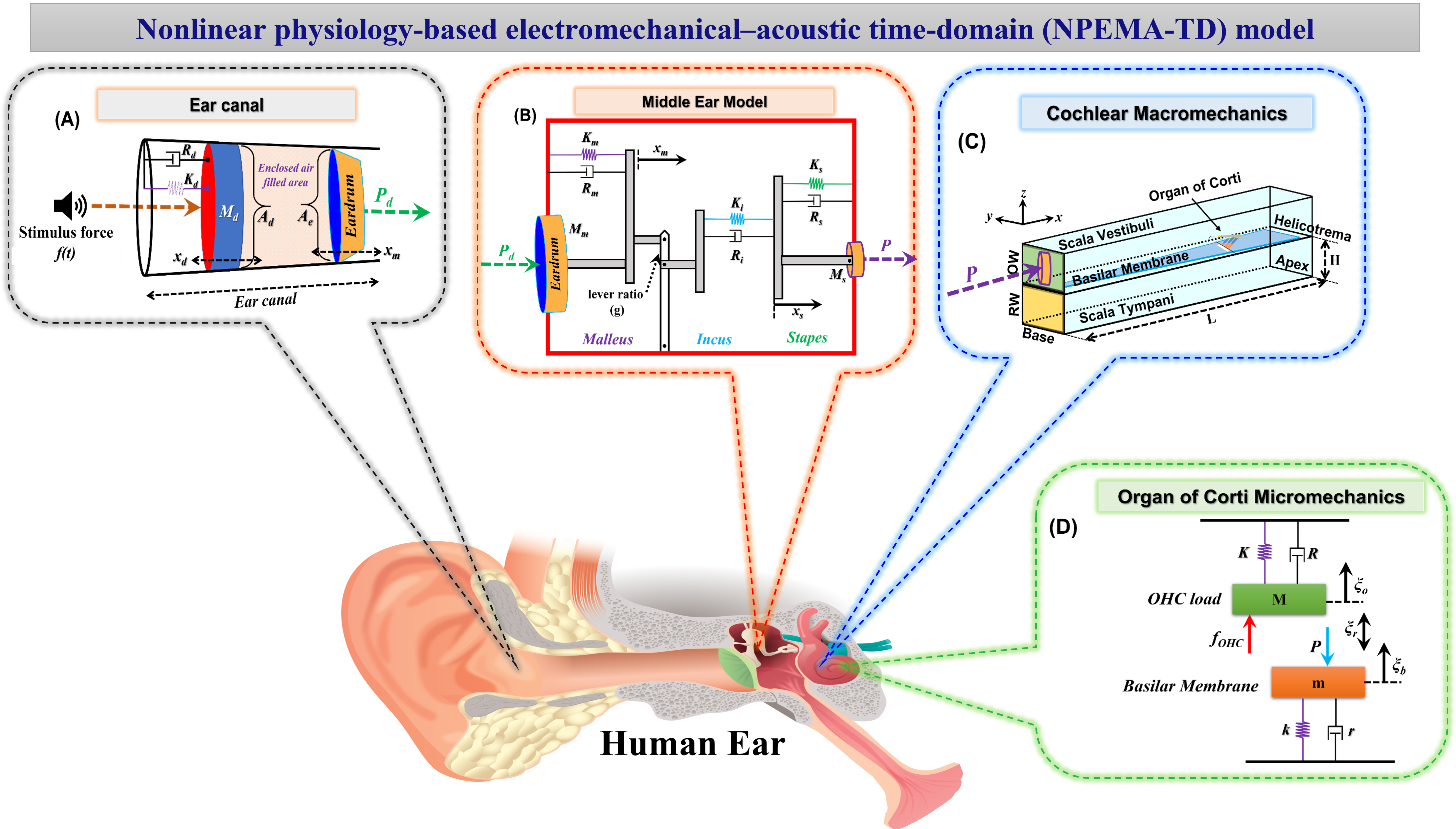
- Developing a nonlinear electromechanical–acoustic time-domain model of the active human cochlea.
- Incorporates outer hair cell active feedback to simulate amplification, tuning, and distortion generation.
- Used to investigate how reduced active feedback and dysfunction alter DPOAE behavior.
- Represents my core direction in mechanistic auditory modeling.
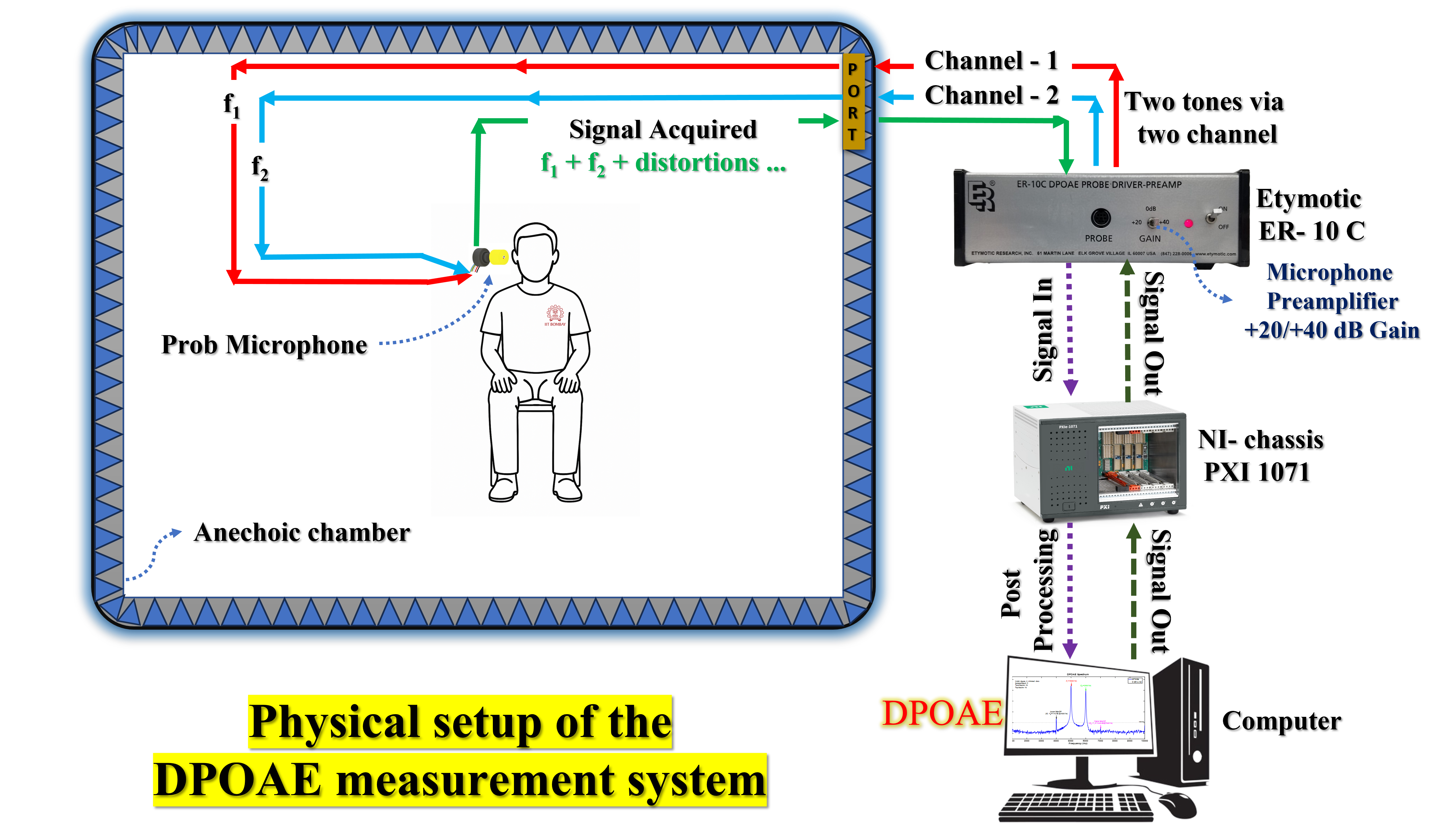
- Performing in-vivo DPOAE measurements in normal-hearing adults using controlled stimulus paradigms.
- Includes ratio sweeps, input-output functions, and low-frequency bias tone studies.
- Aims to identify experimentally measurable signatures of cochlear nonlinear interactions.
- Provides the experimental counterpart to my computational models.
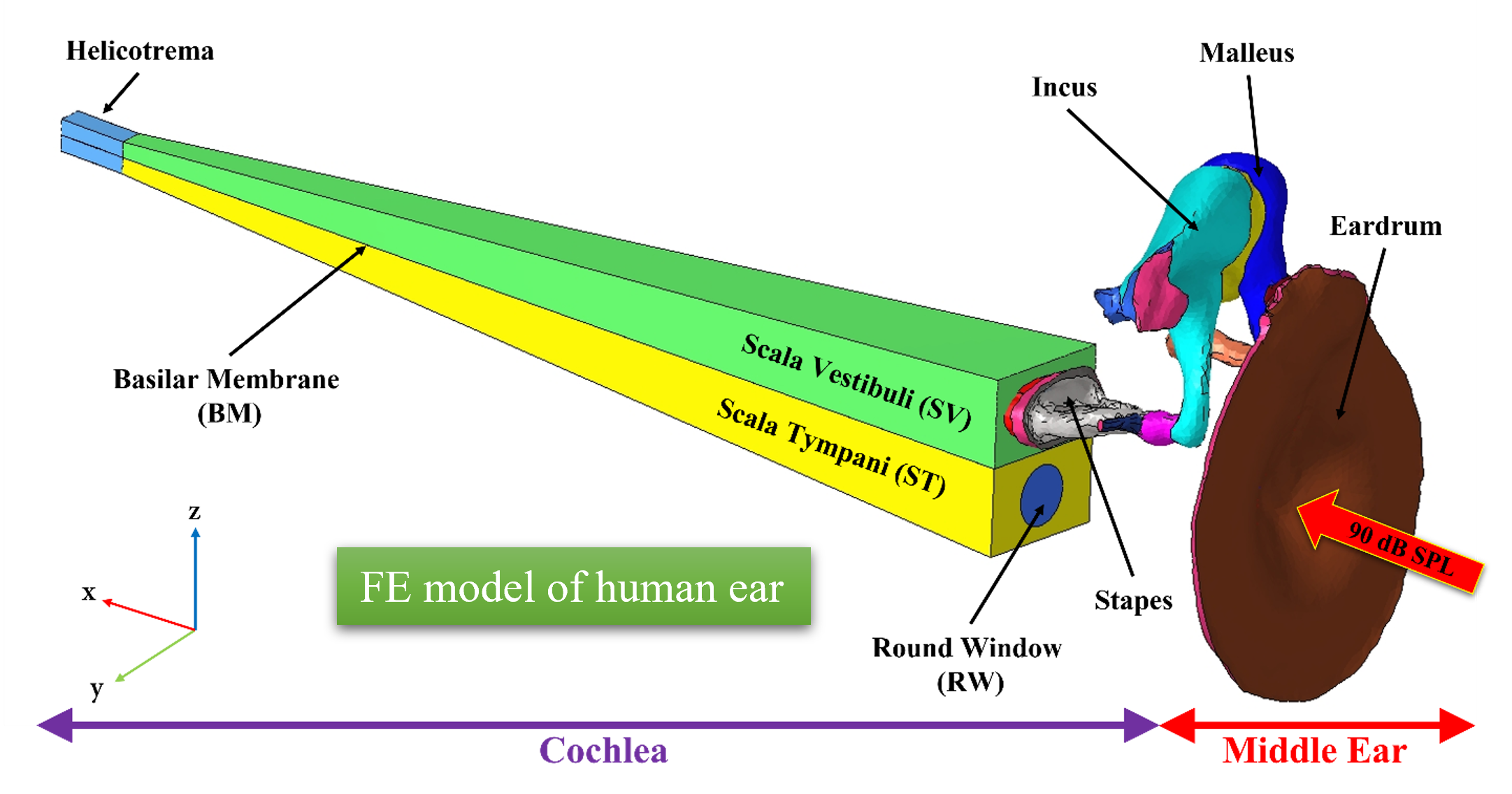
- Built a 3D ACTRAN-based finite element model of the passive middle ear and cochlea.
- Studied the roles of compression waves and traveling waves in backward propagation.
- Explored how passive mechanics can contribute to the interpretation of otoacoustic emission pathways.
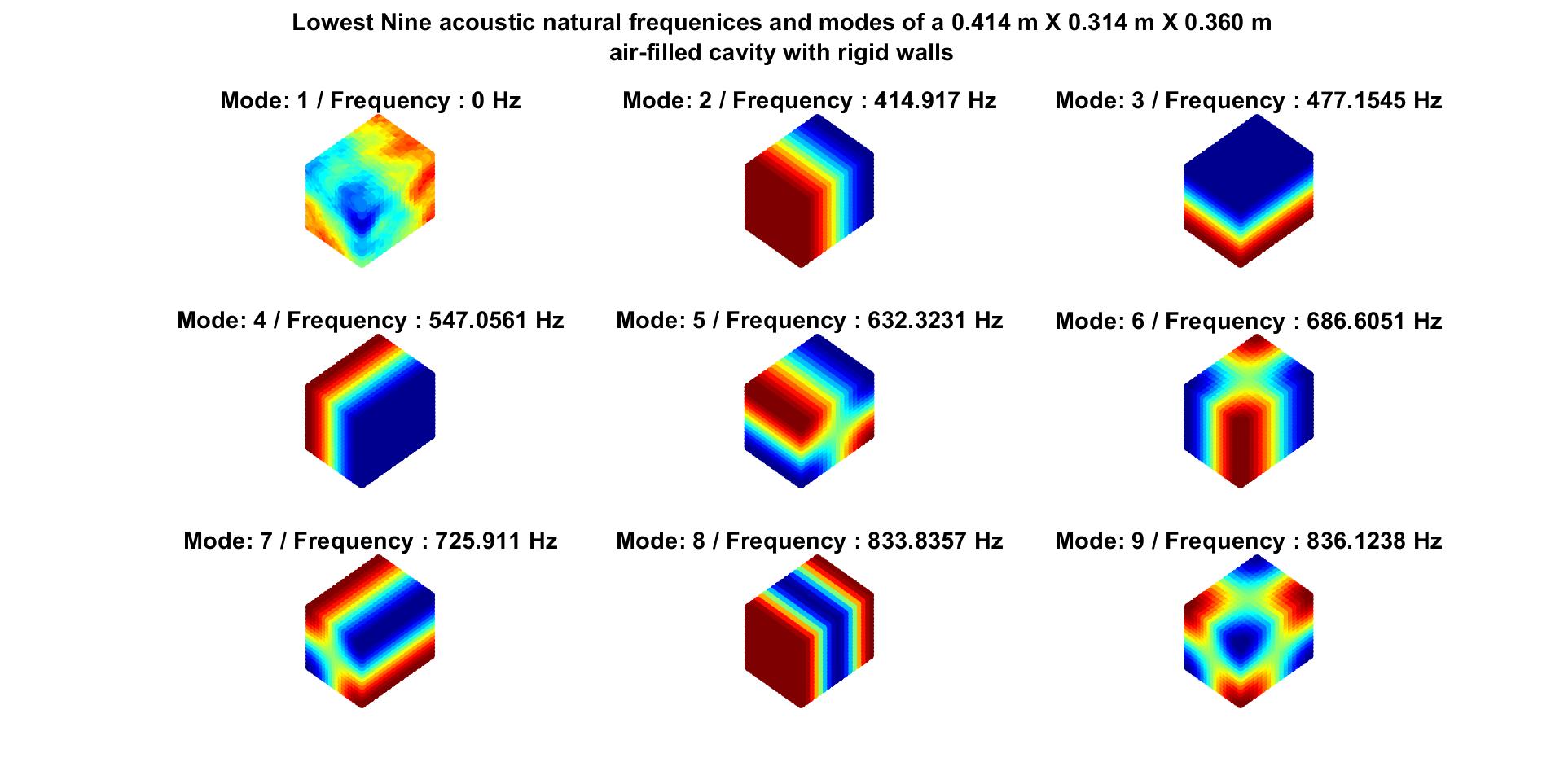
- Compared feedforward and machine learning adaptive algorithms for controlling chaotic and impulsive noise.
- Built a strong foundation in vibrations, acoustics, signal processing, and computational modeling.
- Established a systems-level understanding that now underpins my research in auditory biomechanics.
Technical Expertise
Modeling, Simulation, and Programming
Experiments and Data Analysis
Research Areas of Strongest Fit for Postdoctoral Work
Education

PhD
Mechanical Engineering
(Acoustics and vibrations)
Indian Institute of Technology Bombay
2021 – Present
CPI: 8.70
Supervisor: Prof. Sripriya Ramamoorthy

M.Tech
Mechanical Engineering
(Vibrations and Signal processing)
Indian Institute of Technology Jodhpur
2019 – 2021
CPI: 8.23
Supervisor: Prof. Amrita Puri

B.Tech
Mechanical Engineering
(Vibrations)
University Institute of Engineering and Technology, Kanpur
Chhatrapati Shahu Ji Maharaj University
2008 – 2012
CPI: 8.67
Selected Publications
My publication record reflects work in auditory biomechanics, cochlear modeling, vibro-acoustics, and related computational methods.
Teaching and Mentoring
IIT Bombay Teaching Assistantships
- ME-6112: Acoustics and Hearing
- ME-316: Kinematics and Dynamics of Machines
- ME-104: Engineering Mechanics
- ME-319: Control Systems
Earlier Teaching Experience
- Lecturer, MPGI Group, Kanpur (2012–2017)
- Courses in vibrations, machine design, mechanics, and dynamics of machines
- Teaching assistantships at IIT Jodhpur in mechanics, CAD, and industrial engineering
Postdoctoral Interests
I seek postdoctoral opportunities in acoustics, vibration, multiphysics modeling, computational biomechanics, cochlear mechanics, and auditory biomechanics. My work combines finite element modeling, nonlinear simulation, and experimental methods across both engineering and hearing science domains.
I am particularly interested in interdisciplinary research that integrates modeling, experiments, and data-driven approaches, including AI/ML, to solve complex problems in vibro-acoustics, biomechanics, and diagnostic systems.
Contact
Academic Contact
Vikas Kumar Lakhmani
PhD Candidate, Department of Mechanical Engineering
Indian Institute of Technology Bombay
Email: lakhmani.1@iitb.ac.in